Sunday, April 28, 2013

Photo Courtesy of Wired

Resolution 678: Can I Buy A Yes?
         
          The United Nations, a noble international organization who tirelessly promote international law, economic aid and development and human rights causes. Established in 1945, it has gone from 51 to almost 200 member nations. The organization has touted many successes over the last 70 years, as stated on its website page 60 Ways the United Nations Makes A DIfference. Everything from health, to peace and security, human rights, social development to international law and humanitarian affairs is listed as the UN accomplishments. But sometimes the UN has to come down on non-member and even member nations with sanctions when they get out of line. Sometimes its fair, and sometimes its not. UN Security Council Resolution 678 was an instance where it may have been very unfair.
                Resolution 678 was the final UN Resolution regarding the Iraq invasion and occupation of neighboring country Kuwait. It was issued in November of 1990, and was preceded by 15 other resolutions dating back to August that year. Many of these resolutions demanded that Iraq withdraw from Kuwait (Resolution 664), condemned the invasion and occupation (Reolution 662) and eventually began cutting humanitarian aid and other sanctions on Iraq (Resolutions 665, 666, 670). Most, if not all of these resolutions were swiftly voted and approved by almost all member nations. Cuba and Yemen were the only two objectors to any of these. It was clear that Iraq was acting in aggression and the UN was trying to halt this. Finally as Iraq failed to heed any warnings by the US or UN, the United States decided they were going to invade, but they needed a UN approval to do so.  Getting other members to vote for sanctions and demand Iraq to leave Kuwait was easy, gaining support for an all out attack, not so much. The US and President George H.W. Bush were determined to pass this resolution, though.
                So how did the United States get its almost unilateral support for its Iraq war campaign? Money of course! Now, the UNSC is only comprised of 15 nations so the US didn’t need to get support from over 100, just enough to pass. While permanent members France and the United Kingdom were easy sells, members such as Colombia and Malaysia were not. In fact, they were quite opposed to it. In debating the draft Colombian Foreign Minister said “We wish, above all to appeal for peace and reflection…concerned as we are that any military confrontation would be a tragedy which we would regret for the rest of our lives.” To combat this, US Secretary of State James Baker pleaded with the Colombian President stating the Foreign Minister was “going crazy with these peace initiatives, and must be stopped.” (GlobalResearch.ca)  They also promised financial help and attention to nations such as Colombia, Ivory Coast and Ethiopia.(cite) For ailing Russia, the US negotiated a deal with Saudi Arabia to give them $1 billion in aid and for China, a White House reception! (NY Times)
                For those countries who remained steadfast in opposing the resolution? Well the United States claimed that “That will be the most expensive vote you ever cast,”  and immediately cut millions of dollars of aid to Yemen, Meanwhile Saudi Arabia expelled 800,000 Yemeni workers. (Stone & Kuznick)  Cuba was the only other to veto the resolution but since the US was in no relations with Cuba there was no further sanctions or embargoes.
                So if we have 15 members and 12 voted yes and 2 said no, with China abstaining from voting, that means that without the promise of aid, Colombia, Malaysia, Ethiopia, Zaire, Ivory Coast and Russia may have vetoed this. We know for sure Colombia and Malaysia would have. That takes it down to 10-4 and quite easily if aid had not been promised this bill may have only been passed but 6 or 7 nations, NOT enough for passage into effect. This could have changed history as the United States would have had to go against the UN and public opinion to attack Saddam Hussein and the Iraqis. Would the US have done so anyway?  It wouldn't have been the first time they went to was without the UN’s blessings. This represents what a terrible joke the UN can be with its almost 200 member nations yet only a few have any real power. UNSC Resolution is just another point in history that one wonders how things would have been different had the right thing been done.


Friday, April 26, 2013

Jimmy Carter: The Original Barack Obama?


                As I have been reading and absorbing much of our Nation’s history from World War II on, I have been flooded with a thousand things to write about in this blog. Most of my reading comes from Oliver Stone and Peter Kusnick’s “The Untold History of the United States” and Robert Griffith and Paula Baker’s “Major Problems in American History Since 1945”.  I have read everything from Truman and the end of World War II and the beginning of the Cold War. I have read about Eisenhower’s “Military Industrial Complex” and Kennedy’s assassination. I have read about Lyndon Johnson and Richard Nixon’s debacle in Vietnam. I have even read of the sexual revolution and the feminist movement and even the conservative movement up to and including the Reagan years. Then it hit me, we had President’s in between all of this, right? Ford? Carter? Stone and Kusnick’s book barely seem to mention these men and Griffith and Baker barely lend it part of a Chapter. Were these men not important? I wanted to understand so I did a bit of searching for some reading material on President Carter and I was shocked at what I found.  I found Barack Obama!
                Well, kind of. While it may be stretching it and I suppose if I took an entire class on the two, I may find more differences than similarities, I thought it would be an interesting topic to cover and one I could do more research than just my approved readings. After watching a magnificent almost 3-hour PBS DVD on the life of Jimmy Carter, I began to greatly sympathize with him, much like, and only like I have any other politician, and that is President Obama. Some similarities such as his relatively sudden rise to popularity and almost surprise victory as the party’s nominee and eventual president struck me first. Obama had come onto the national scene 4 years before but as a junior Senator, to anyone who did not follow politics daily (most of us) he was unknown until 2007. Carter was never in Washington until 1976 but did serve as Governor of Georgia for a term. Both men ran on platforms of honest, transparent government that would not only cut wasteful federal spending but also help out even the poorest of American families. In 1976 and in 2008 the country was fed up with Congress and the recent leaders of our nation.  Before Carter came Watergate and Vietnam and before Obama was 8 years of lies and terror under George W Bush. At both junctures the country needed a change; they needed a man with charisma and honest trusting character to believe in. They wanted change. Both men were elected by a very narrow margin.
                Once elected, both men inherited many problems. A bad economy and energy concerns along with foreign affairs complications gave both Presidents a daunting to do list from day one. The task of getting elected was the easy part. Both Carter and Obama had to deal with a much divided Congress that they failed to see eye to eye with. Sure, they had their programs and plans but neither was very capable of getting Congress on their side to get anything major accomplished. Our country was much divided both in the 1970s and in 2008 (and now!)  As Carter went deep into his first (and only) term, the endearing qualities that got him to Washington were turned against him and he was labeled weak and ineffective. Even the media jumped on the bandwagon. In August of 1980 the Washington Post made fun of Carter allegedly being attacked by a rabbit to claim he was weak and ineffective (Today In Georgia History).  In 2012, Florida Rep. Allen West said "President Obama has clearly surpassed former President Jimmy Carter and his actions during the Iranian Embassy crisis as the weakest and most ineffective person to ever occupy the White House." (USNews)
                Finally, the greatest foreign affair achievements of these two men may be overshadowed by domestic failures. The Camp David Accords were a monumental achievement that Americans were seemingly indifferent to and Obama’s hunting and killing of Osama Bin Laden was hardly the achievement it would have been had Bush done it years before. Both  men found themselves trying to do the best they could, at odds with Congress for the most part and trying to live up to the promise of a divided American people. Obama, however, got to serve a second term and it is believed by me to be largely more successful than the first.  As for Carter, I think in time he will be remembered with more positive than negative, especially for his work at the Carter Center and Habitat for Humanity.  In fact, he kind of reminds me of Al Gore in that sense. Perhaps Carter would have been better served losing that election as Gore did to Bush. Maybe then, we could look at Carter for what he really was, a good, honest, humanitarian, not a politician.


Sunday, April 21, 2013

Why the New Right Was So Wrong


Why the New Right Was So Wrong

Image Courtesy of New York Times

                The decades of the 60’s and 70’s provided our country with so much positive, progressive change. A new generation of young Americans were demanding their voice be heard and that it be heard equally. Women were gaining privileges they never had before, African Americans and gays were having their voices heard and were uniting for the cause of equality. It seemed that all was right and good again in the greatest nation in the world.  And then, a bunch of whackjobs came in and tried to turn the progressive bus right around and take us back decades, if not centuries! Who were these people and where did they get their crazy ideas?
                According to US History.org, the New Right comprised itself of Christian leaders and other conservatives, mainly from suburban and rural communities. Their claim was that moral decay was ruining our nation and that sex was it’s biggest offender. Christian leaders such as Jerry Falwell and Pat Robertson preached tirelessly about the Moral Majority and the moral decline of America. Celebrities like Anita Bryant also took a moral stand against sex and especially homosexuality. While its understandable that some people could be opposed to some of the new and outrageous ideas some Americans had, a lot of what they had to say was completely ridiculous. Speaking of Miss Bryant, her big stance on homosexuality being wrong was that they were recruiting our children to be gay!  I suppose she thought gay men and women were going around trying to convince children to do the same. 40 years later we know that homosexuality is not a choice and that you cannot recruit for it. Where did she even get such an idea? A good Bryant quote states “If gays are granted rights, next we’ll have to give rights to prostitutes and to people who sleep with St. Bernards and nailbiters” (Gayrites.net)  Nailbiters? Anita, do you have any idea what you are saying?
                Pat Robertson was no better, he had plenty of distorted views on abortion and feminism. In 1992, he told the Washington Post “The feminist agenda is not about equal rights for women. It is about a socialist, anti-family political movement that encourages women to leave their husbands, kill their children, practice witchcraft, destroy capitalism and become lesbians." (Highbeam) Again, it is understandable to have differing views on these issues but to say witchcraft and killing children?  It is no wonder so many people think of religious folks as crazy. There is no basis for this kind of accusation.  Jerry Falwell, though, was the worst of them all.  Falwell founded, in 1979 an organization called the Moral Majority, which at first reminds me of Nixon’s “Silent Majority.”  This “majority” was based on the thought that cultural trends such as as non-marital sex, homosexuality, the absence of prayer in schools and various others were ruining our nation and destroying our young people. Some very special quotes from Falwell include "The ACLU is to Christians what the American Nazi party is to Jews." and "If you're not a born-again Christian, you're a failure as a human being." (SF Gate) I’m not sure about anyone else, but these things are nothing but inflammatory and insane.
                The problem was that enough people believed them and enough people, though they were generally the folks least exposed to things such as pornography and homosexuality, went along with these New Right leaders in passing laws restricting homosexual practices, teachings in sex education and trying to eliminate pornography. It is scary to think what the New Right may have been able to accomplish if they had tactfully tried to spread their message in some sort of reasonable voice. It is these pig-headed comments that we can all laugh about that perhaps saved our country from going too far backwards in terms on social freedoms and equalities. I wonder what Falwell would say today, of the legalization of same sex marriage and marijuana in certain states.  He’s probably rolling in his grave.


Sunday, April 7, 2013

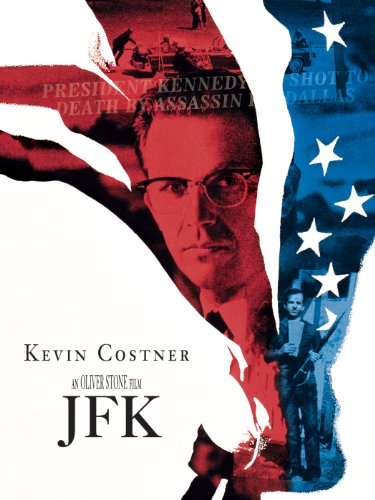
(Photo by Amazon.com)

JFK: More Than Just A Conspiracy

                It is a film about one of the most important events in the nation’s history.  It is a film about one of the most disputed events in the nation’s history.  There is no shortage of questions surrounding the 1963 assassination of President John F. Kennedy. Director Oliver Stone is not shy of voicing his opinion over the matter and he does so in one of his most important films, and maybe one of the most important films of the last half of the 20th Century. One can go online and find countless reviews of Stone’s 1991 film JFK, so I will try to make this slightly original. What stands out most to me is that this movie uncovers a larger problem than JFK, a problem of government secrecy.
                First, I will start my proclaiming my fascination with the films look inside the life of New Orleans district attorney Jim Garrison and how he became obsessed with finding answers to the mysterious assassination. Garrison did what many people would never dream of doing, and that is to sacrifice his own “life” to uncover and reverse something he felt was ruining the fabric of our country. Garrison obviously didn’t sacrifice his life by means of death, but he sacrificed his family life, his job and reputation in the search of what he thought was justice. The task before him was monumental and perhaps unwinnable from the onset. He never wavered though, as he began uncovering covert CIA operations and a paper trail of evidence supporting something far more elaborate than what the American people were being told. In a broader sense, his search was more for truth in general than it was to find the real story behind that fateful day in Dallas. It is this reason that I feel he succeeded and it is this part of the JFK movie that I wish to expound upon.
                For some, this movie may have been a simple one, the question of who was really behind the assassination. But for me, it was more than that, and I believe for Jim Garrison it was more than that. What seemed to be frustrating Garrison the most was that he was encountering so much resistance in his quest for answers to his questions. While perhaps Garrison never found the truth he was looking for, he most certainly uncovered the fact that the truth had not been fully divulged by the government. His quote “telling the truth can be a scary thing sometimes” sums up his plea to have some basic questions answered. Eyewitness accounts never seemed to match up with the story the American people were told. People were detained and questioned and released, the events of Lee Harvey Oswald’s day did not make sense, nor did he even seem to be capable of pulling off such an act. The parade route being rerouted at the last minute and the fact that Presidential security was much less than it normally would have been, are all reasons to believe that this was an event some, more than just one man, knew was coming. It seemed every time Garrison stumbled upon something that did not make sense, he found another and another.
                The culmination of Garrison’s efforts, the trial of Clay Shaw, seemed a bit anticlimactic to me. It never seemed like Garrison really had a case against Shaw and I never really thought he would get a guilty verdict. I am unsure that Garrison himself even expected one. The most important part of the movie for me was Garrison’s closing arguments where he talked of the erroneous “magic bullet theory” and of how one day, his son could go into the National Archives and see the files of what the CIA and FBI really knew. It was a gripping speech that may have strayed from the objective of convicting Shaw, but hearkened us all to stop and think about whether our government was telling us the truth and if they weren’t, how come? This was more an attack on the US Government as a whole than just on Clay Shaw.
                Was there a conspiracy to kill JFK that included top level government officials or the FBI or CIA? I don’t believe we will ever know that for sure. But Jim Garrison and Oliver Stone made it crystal clear that it is a distinct possibility and I believe the movie was a referendum on government transparency. I believe it did a lot of good too, or at least some. One benefit that came from this film was the President John F. Kennedy Assassination Records Collection Act of 1992. This act released for public availability a lot of the records and documents pertaining to the assassination of Kennedy. The act itself stated that all records be released, but everyone knows that they were not, in fact the Assassination Archives and Research Center (AARC) has requested that the CIA turn over some 50,000 pages of documents relating to the assassination. (FOIA Blog)  To add to that, and as Stone points to in the film, even now public and most popular Warren Commission documents are possibly filled with erroneous and forged testimony. Can we even believe the documents that have been released, let alone how many have not?
                Perhaps a little bit of trust in the powers that be is in order to avoid going completely crazy, but a bit of questioning is in order here. If Oliver Stone’s movie does nothing else, it begs the question “what is our government not telling us and why.”